


Ask ten people what smooth coffee means, and you’ll get ten different answers. Some mean “not bitter.” Others mean “easy to drink.” Some just mean “doesn’t hurt my stomach.” It’s one of the most common descriptors used by coffee drinkers and yet one of the least clearly defined.
That doesn’t mean smooth is meaningless. It just means it’s shorthand. When people describe coffee as smooth, they’re usually reacting to what the coffee isn’t doing, rather than naming a specific flavor it is delivering.
This guide breaks down what smooth coffee actually means, how it differs from bitter or flat coffee, and what factors contribute to that perception.
What Does “Smooth” Coffee Actually Mean?
When people describe coffee as “smooth,” they’re rarely pointing to a specific flavor. Instead, they’re describing how the coffee feels as it moves across the palate and how it finishes. Smoothness is a sensory experience shaped by balance, texture, and restraint rather than a single tasting note like chocolate or citrus.
A smooth cup of coffee typically lacks harshness. There’s no sharp bitterness, no aggressive acidity, and no drying or astringent aftertaste. The flavors feel integrated rather than disjointed, and the coffee finishes cleanly instead of lingering in an unpleasant way. Even when acidity or intensity is present, it feels controlled and intentional.
That being said, smooth does not mean weak or bland, either. A coffee can be rich, expressive, and complex while still tasting smooth. What separates smooth coffee from coffee that feels rough or overwhelming is not how much flavor it has, but how those flavors work together. When sweetness, acidity, and body are in proportion, the result is a cup that feels comfortable to drink from the first sip to the last.
Because smoothness is more about balance than flavor, it’s influenced just as much by brewing as it is by the coffee itself. The same coffee can taste smooth in one context and harsh in another, depending on extraction. Understanding smoothness, then, means looking beyond labels and into how coffee is roasted, brewed, and experienced as a whole.
Smooth vs. Bitter vs. Flat Coffee
To fully understand what smoothness means, you need to understand the opposite end of the flavor spectrum.
Bitter coffee
Bitterness isn’t inherently bad—coffee naturally contains bitter compounds—but harsh bitterness usually comes from over-extraction or overly dark roasting.
When people describe coffee as bitter, they usually mean that the finish lingers in an unpleasant way, the cup tastes sharp, burnt, or drying. Milk or sugar feels necessary just to make it drinkable. This is often what people are trying to avoid when they say they want “smooth” coffee.
Flat coffee
Flat coffee is the opposite problem. Instead of too much bitterness, there’s too little structure (or flavor at all). Flat coffee often tastes dull and muted, with no sweetness or acidity. Flatness can come from stale beans, under-extraction, or overly coarse grinding.
Smooth coffee
Smooth coffee sits in the middle. It has enough extraction to feel full and satisfying, but not so much that bitterness dominates. The cup feels cohesive, with no single element overwhelming the rest.
What Makes Coffee Taste Smooth?
Smoothness in coffee is less about a single variable and more about how several elements interact. Roast level, grind size, brew method, and water all influence extraction. When extraction is balanced, those compounds express themselves evenly. When it’s not, bitterness, sharp acidity, or hollowness tend to dominate.
Roast level and flavor development
Roast level plays an important role in how smooth a coffee tastes, though not always in the way people expect. As coffee roasts, acids break down, sugars caramelize, and bitter compounds develop. Lighter roasts retain more acidity and origin character, which can feel lively and complex. Darker roasts reduce perceived acidity but introduce more bitterness as roast flavors take over.
Coffees often perceived as smooth tend to be balanced in terms of acidity, sweetness, and bitterness. This is why medium and medium-light roasts are frequently described as smooth: they preserve structure without overwhelming the palate.
Grind size and extraction balance
Grind size determines how quickly water extracts flavor from coffee. When coffee is ground too fine, water pulls out bitter compounds more aggressively, often resulting in a drying or harsh finish. When it’s ground too coarse, less compounds are extracted, leaving the cup thin or underdeveloped.
A properly sized, consistent grind allows for even extraction. This is a major contributor to smoothness. You want the coffee flavors to be extracted evenly, so grind your beans based on the brew method you use.
Learn how to grind coffee beans at home (with and without a grinder) →
Brew method and contact time
Different brew methods extract coffee in different ways, which affects how smooth the final cup feels. Immersion methods allow coffee and water to interact more gently over time, often producing a fuller-bodied, rounder cup. Percolation methods move water through the coffee bed more quickly, which can highlight clarity and brightness but also magnify errors in grind size or ratio.
Neither approach is inherently smoother than the other. Smoothness comes from matching grind, ratio, and time to the method being used, allowing flavors to develop without being pushed too far in any direction.
Water quality, temperature, and ratio
Because water makes up nearly the entire cup, its role in smoothness is often underestimated. Water that’s too hot can intensify bitterness, while water that’s too cool may fail to extract enough sweetness. Mineral content also matters—water that lacks structure can make coffee taste flat, while overly hard water can emphasize harshness.
Similarly, brew ratio affects balance. Coffee brewed too strong can feel heavy or bitter; brewed too weak, it can feel hollow. Smooth coffee typically comes from moderate ratios that allow flavors to unfold gradually rather than all at once.

Coffee Beans Commonly Perceived as “Smooth”
While no coffee is inherently smooth on its own, certain coffees are more commonly described that way due to how their flavor structure tends to present in the cup. Some origins are often associated with rounder, lower-acid profiles, which many people interpret as smooth.
Brazilian coffee
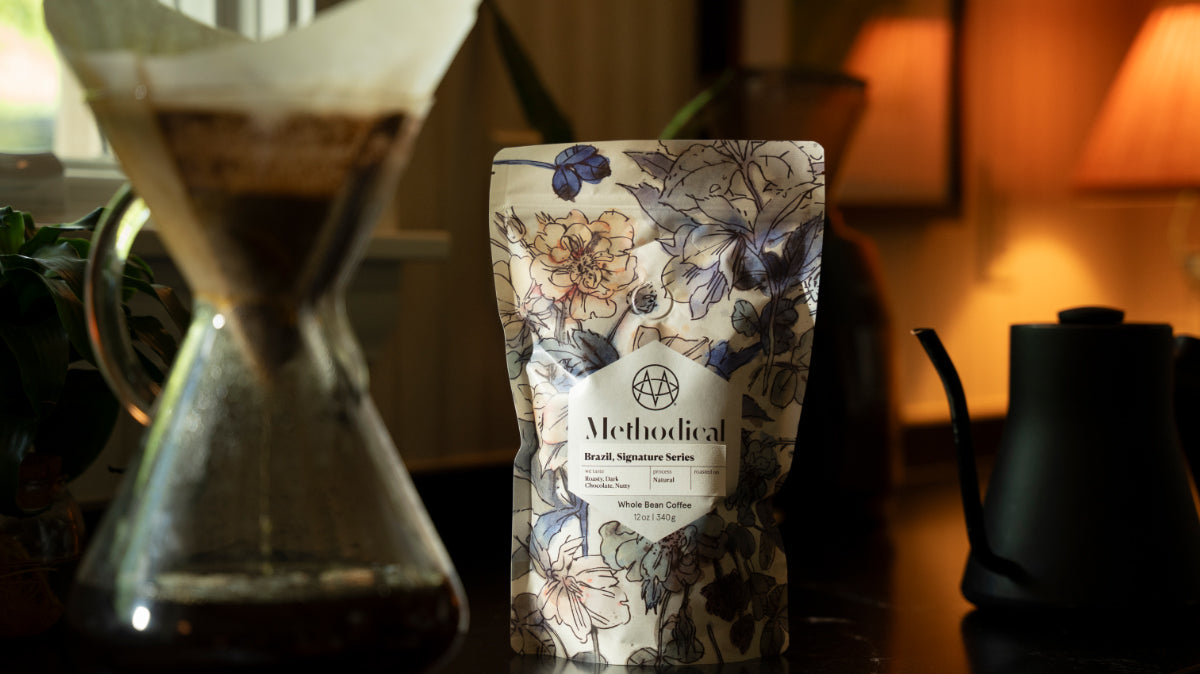
Coffees from Brazil, for example, are commonly described as nutty, chocolate-forward, and low in perceived acidity. These qualities can create a soft, approachable cup when extraction is balanced.
Our Brazil, Signature Series is a blend of coffees from three Brazilian farms that highlights how sustainable farming practices create a truly smooth cup of coffee.
Colombian coffee
Coffees from Colombia often strike a middle ground, balancing mild acidity with sweetness and body. When grown thoughtfully and roasted with care, they tend to feel structured without sharpness, which contributes to their reputation as smooth, all-purpose coffees.
Our Colombia, Landmark series is an excellent example of smooth Colombian coffee.
Our roast brings together notes of caramel, nuts, and citrus once brewed.
Guatemalan coffee
Similarly, coffee from Guatemala is often associated with a rounded mouthfeel and gentle brightness. Acidity is often present but measured, supporting sweetness rather than overwhelming it.
Our popular Guatemala, Ixlama series is both smooth and sweet with notes of apple, chocolate, and caramel. The beans are shade-grown, then sun-dried, resulting in a round, well-developed flavor profile synonymous with Guatemalan coffee.
How to Brew a Smoother Cup at Home
Brewing a smoother cup of coffee doesn’t require new equipment or radically different beans. In most cases, it comes down to making small adjustments that reduce over-extraction and encourage balance. The following steps focus on refining what you’re already doing, rather than starting from scratch.
Start with fresh, properly rested coffee.
Freshness matters, but coffee that’s too fresh can actually work against smoothness. In the days immediately after roasting, coffee releases carbon dioxide, which can interfere with extraction and lead to sharp or unsettled flavors.
Allowing coffee to rest helps stabilize extraction. Rested coffee tends to brew more evenly, producing a rounder, more cohesive cup with less harshness.
Adjust your grind before changing anything else.
If your coffee tastes bitter, astringent, or drying, grind size is often the culprit. Coffee ground too fine exposes more surface area to water, which accelerates extraction and pulls out bitter compounds late in the brew.
Before changing beans or brew method, try grinding slightly coarser. This small adjustment often softens the finish and allows sweetness and body to come forward, making the cup feel smoother without sacrificing flavor.
Your grinder might also be the culprit. Consider switching to a burr grinder if you’re using a manual one.
Use water that supports balance.
Water temperature and composition play a larger role than most people realize. Brewing with water that’s too hot can emphasize bitterness, especially in darker roasts. Lowering brew temperature slightly (even by a few degrees) can mellow the cup without flattening it.
Mineral content matters as well. Water that’s overly soft can make coffee taste thin, while very hard water can exaggerate harsh flavors. Filtered water with moderate mineral content tends to support smoother extraction and better overall balance.
Revisit your coffee-to-water ratio.
Strong coffee is not the same thing as smooth coffee. Brewing with too much coffee relative to water can make flavors feel compressed and aggressive, particularly bitterness.
If your cup feels heavy or sharp, try a slightly lower dose while keeping everything else the same. A modest adjustment to ratio often opens up the cup, allowing flavors to express themselves more gradually and comfortably.
Find the ideal coffee-to-water ratio here →
Match brew time to your method.
Extraction is shaped by contact time. Brewing too long can push coffee past balance into bitterness, while brewing too quickly can leave it underdeveloped.
Rather than chasing exact times, focus on consistency. Use the same method, ratio, and timing from brew to brew, adjusting only one variable at a time. Smoothness tends to emerge when extraction is controlled and repeatable.
Understanding Smoothness in Coffee
Smooth coffee isn’t defined by a single origin, roast level, or brewing method. It’s the result of balance—when bitterness, acidity, sweetness, and body are working together rather than competing. When a cup tastes smooth, it’s usually because extraction has been guided carefully, allowing flavors to feel integrated from the first sip to the finish.
If you’re looking to explore coffees designed with balance and clarity in mind, Methodical offers a rotating selection of thoughtfully sourced and carefully roasted coffees, each intended to showcase structure, sweetness, and approachability in the cup.

You might also like:
- How to Enjoy Espresso: The Complete Guide to Drinking Espresso for Beginners
- 10 Coffee Myths and Misconceptions: Separating Fact from Fiction
- What is Blonde Espresso? Insights From a Coffee Roaster
- Why Coffee Tastes Better at Coffee Shops (and How to Close the Gap)