


Building your first home espresso setup can feel more complicated than it needs to be. A quick search will turn up endless gear lists, conflicting advice, and enough accessories to make it seem like good coffee requires a full café on your kitchen counter.
In reality, most beginners need far less equipment than they think. A capable grinder, a consistent machine, and a workflow that fits your daily routine will take you much farther than a collection of gadgets. Whether you prefer straight espresso or milk-based drinks like cappuccinos and lattes, the goal is the same: choose a few quality tools that help you brew coffee you actually enjoy making every day.
In this guide, we’ll walk through what matters most in a first espresso setup, what you can safely skip, and how to build a practical home espresso bar that works for your space, budget, and taste.
What Kind of Espresso Setup Do You Actually Want?
Before comparing machines and grinders, it helps to think about what you actually want this setup to do.
Some people enjoy pulling a careful shot on Saturday mornings and don’t mind the extra steps. Others want a cappuccino before work and would rather not troubleshoot their coffee before they’ve had it. For some, espresso becomes a hobby. For others, it’s just a daily habit.
It’s also worth being realistic about your kitchen space, how much time you want to spend making coffee, and whether you enjoy tinkering. Espresso can become a rewarding ritual, but it does require more attention than drip coffee or pour over.
A lot of first setups go sideways when people build for their ideal version of themselves instead of their real routine. The gear that looks exciting online may not fit your counter, your schedule, or your patience. In most kitchens, a smaller, simpler setup you enjoy using every day is the better investment.
Check out these home coffee bar setups for inspiration →
Three Beginner-Friendly Espresso Setups
There are many ways to build your first home espresso setup. These builds give you three different approaches depending on budget, space, and how hands-on you want the process to be.
Beginner Espresso Setups At a Glance
|
Setup Type |
Grinder |
Machine |
Ideal For |
|
Minimal Manual Setup |
JavaPresse Manual Burr Coffee Grinder |
Flair NEO Flex |
Coffee enthusiasts who enjoy hands-on brewing and want the most affordable entry point |
|
Practical Electric Setup |
Baratza Encore ESP |
Breville Bambino Plus |
Most beginners looking for a compact, reliable daily espresso setup |
|
Aspiring Barista Setup |
DF54 Flat Burr Grinder |
Breville Bambino Plus |
Users who want stronger grind performance from the start |
Build 1: The Minimalist, Manual Setup
This is the setup for someone who wants the most affordable path to real espresso and doesn’t mind being more hands-on.
Recommended equipment
- Flair NEO Flex ($119.00)
- JavaPresse Manual Burr Coffee Grinder ($39.99)
-
Hario Digital Coffee Scale ($56.00)
Manual machines enable beginners to explore espresso without investing in large countertop equipment. Pairing one with a capable manual grinder like the affordable JavaPresse provides excellent grind quality for the price.
This kind of setup is not the fastest or most convenient, and that is part of the bargain. You’ll be more involved in the process, and you will probably learn a lot, quickly, because manual equipment has a way of making the fundamentals very obvious. For the right person, that is a feature, not a bug.
Build 2: The Practical Electric Beginner Setup
This is the best espresso setup for most people starting their home espresso journey.
Recommended equipment
- Breville Bambino Plus ($499.95)
- Baratza Encore ESP Grinder ($199.95)
-
Hario Digital Coffee Scale ($56.00)
A compact machine like the Breville Bambino paired with the Baratza Encore ESP gives beginners a setup that is approachable, capable, and relatively easy to grow with. The Bambino brings fast heat-up, a small footprint, and a genuine espresso workflow to the counter without demanding café-level commitment.
The Encore Grinder is the part that makes the whole thing make sense. Baratza designed it specifically to give users the finer adjustment range espresso requires, which is exactly what a first setup needs if it is going to be teachable instead of maddening.
This build is great because it gives you enough control to make meaningful improvements and enough convenience to use it regularly.
Build 3: The Aspiring Barista Espresso Setup
Best for espresso lovers who expect coffee to become a long-term hobby.
Recommended equipment
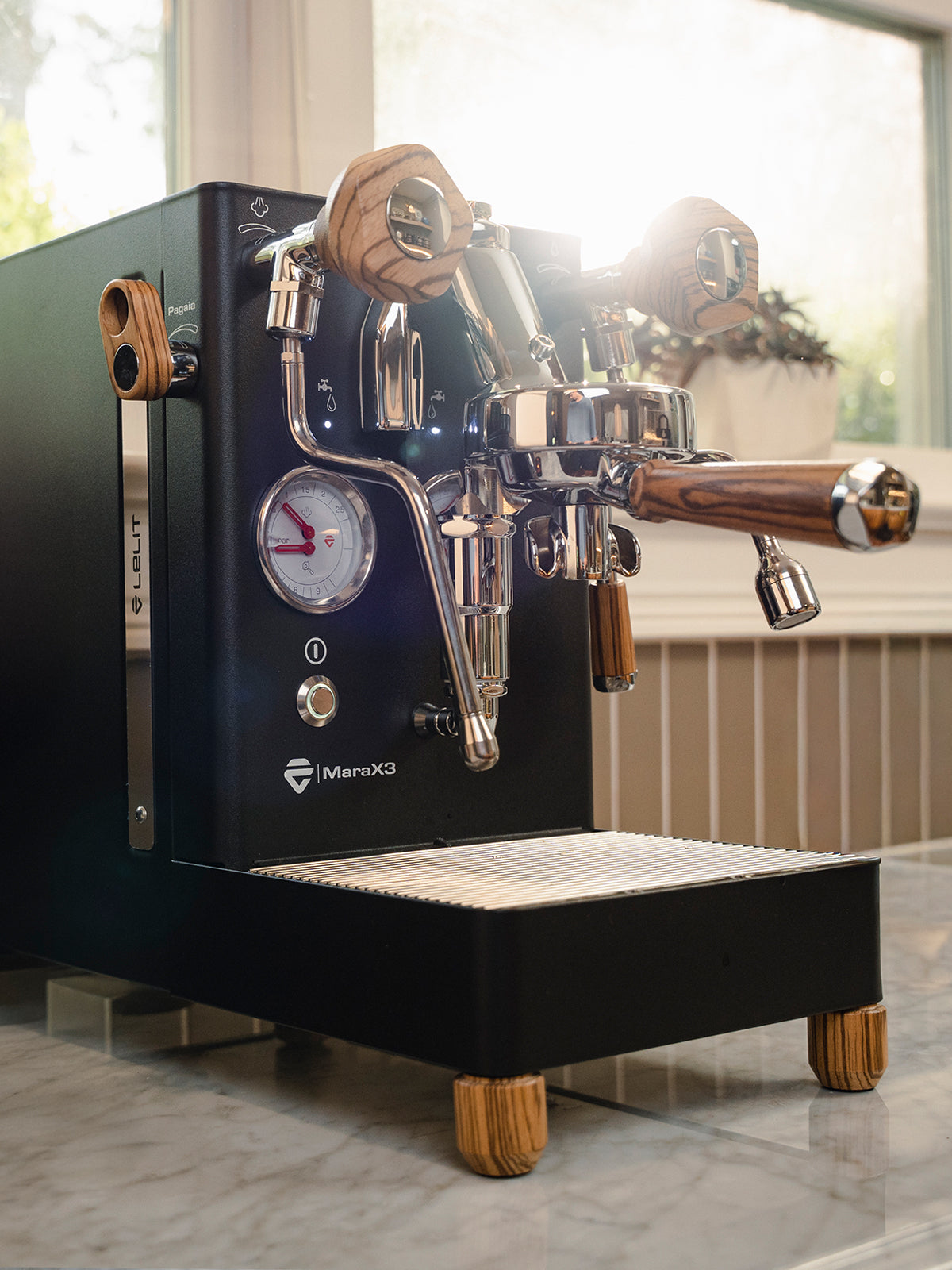
- Lelit MaraX ($1699.95)
- DF54 Coffee Grinder ($260.00)
-
Hario Digital Coffee Scale ($56.00)
The Lelit MaraX is a compact heat-exchange machine designed to deliver greater temperature stability and stronger steaming performance than most entry-level machines. That added consistency becomes especially valuable as you start refining your dialing-in skills or preparing multiple milk drinks back-to-back. It also offers a more traditional espresso workflow, giving aspiring home baristas a closer feel to what they might experience on commercial equipment.
Pairing the MaraX with a grinder like the DF54 helps balance the setup. The grinder provides the precision needed to dial in different coffees, while the machine offers the thermal performance and steam power to support more advanced techniques.
This kind of setup isn’t necessary for everyone. It asks for a larger upfront investment and a bit more counter space. But for someone who already knows they enjoy the process of making espresso, it can be a satisfying long-term choice..
The Foundation of Any Espresso Bar Setup
If there is one piece of advice that comes up again and again in beginner espresso guidance, it’s this: the grinder is the foundation of your home espresso setup.
That can feel unintuitive at first. Espresso machines are big, shiny, and tend to get most of the attention. In practice, though, the grinder plays a huge role in whether your espresso is balanced and repeatable or frustratingly inconsistent.
Why grind quality matters for espresso
Espresso depends on very fine adjustments. You’re controlling how water moves through a tightly packed bed of coffee under pressure, and even small changes in grind size can dramatically affect flow and extraction. If your grinder can’t produce a consistent grind or offer precise adjustments, dialing in becomes much harder.
That’s why a decent machine paired with a capable burr grinder will often produce better results than an expensive machine paired with a weak grinder. Beginners naturally want to spend most of their budget on the machine, but if the grinder can’t keep up, the entire setup becomes harder to learn on.
Learn more: How to Grind Coffee Beans →
Built-in grinders vs. separate grinders
This is also why built-in grinders can be a mixed bag. They save space and look tidy, but separate grinders often offer better performance and more flexibility. If you eventually upgrade your machine, a good standalone grinder can stay with you.
The grinder may not be the most glamorous purchase in your espresso setup, but it’s one of the most important.
Essential Pieces of a Beginner Espresso Setup
You don’t need a huge amount of equipment to make excellent espresso at home. A few key tools handle most of the work.
A burr grinder designed for espresso
The foundational tool should, of course, be a burr grinder with enough range and precision to dial in espresso properly. You don’t need the most expensive grinder on the market, but you do need one that was designed with espresso in mind.
Discover the best burr grinders for coffee →
A consistent espresso machine
You also need a machine that is consistent, not necessarily fancy. A first machine does not need dual boilers, flow profiling, a touchscreen, or café-level steam power. It needs to give you stable enough performance that you can make changes and understand what those changes did.
Machines like the Breville Bambino Plus remain popular beginner options because they heat quickly, take up little space, and support real espresso workflow.
Find the right home espresso machine →
A digital scale
A scale is one of the simplest ways to improve consistency. By measuring both the amount of coffee used and the amount of espresso produced, you remove guesswork and make dialing in much easier.
Fresh coffee
Make sure you have freshly roasted coffee from a reputable roaster. Even a well-chosen setup takes a little dialing in, especially when you change coffees. A lot of beginners assume that one unpleasant shot means the equipment is wrong or the coffee is bad, when the more likely explanation is that the grinder needs to move a little finer or a little coarser. Espresso has a learning curve, but that curve gets much less steep when the tools are doing what they should, coffee included.
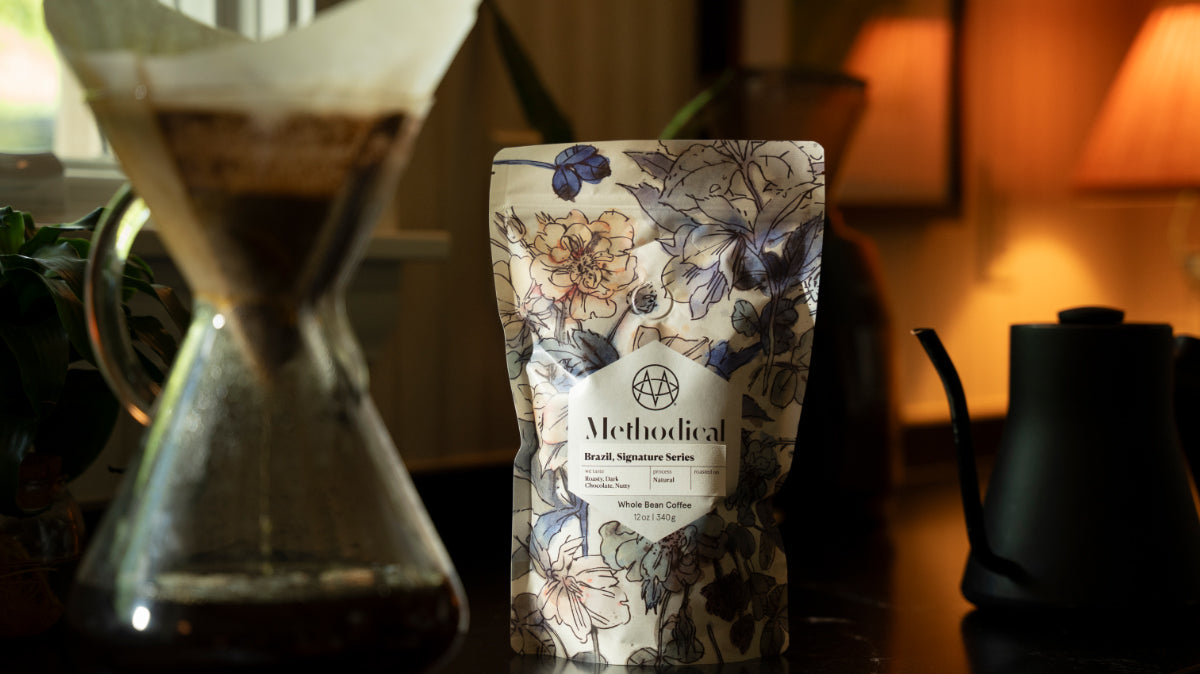
Shop Methodical’s carefully sourced & expertly roasted coffees →
Do You Want to Steam Milk?
If you prefer cappuccinos, lattes, and cortados in the mornings, you might want to invest in an espresso machine with a steam wand.
Machines with built-in steam wands
There are plenty of home espresso machines that include a steam wand to heat and froth milk. If milk drinks are part of your daily routine, a machine with a reliable steam wand is usually the simplest option compared to a separate piece of equipment.
Manual and lever machines
Some manual espresso makers focus only on brewing espresso and do not include a steam wand. These setups are often very good at pulling espresso shots, but the drawback is that they require a separate method for heating or frothing milk if you want milk-based drinks.
Learn how to steam milk with a variety of equipment →
If you primarily drink straight espresso or Americanos, milk steaming may not be important. But if your daily coffee is a latte or cappuccino, choosing a machine with a steam wand will make your setup much more convenient.
Espresso Equipment That Beginners Should Skip
Many espresso accessories solve niche problems or offer small improvements for experienced users, but beginners can skip them at first.
Accessories that can usually wait:
- Distribution tools
- Puck screens
- Bottomless portafilters
- Precision baskets
- Shot mirrors
-
Automatic tampers
These tools may become more useful once you understand your workflow and know what problems you’re trying to solve. At the start, it’s best to stick to the essentials.
Recipes to Try With Your Home Espresso Setup
Bookmark these Methodical recipes to use when you get your espresso bar all set up.
- Americano
- Shaken Espresso
- Espresso Tonic
- Flat White
- Latte
- Cappuccino
- Espresso Macchiato
- Cortado
- Peppermint Mocha
- Espresso Martini
- Coffee Cocktails
Start Simple and Build From There
Your first home espresso setup doesn’t need to impress anyone or rival your nearest coffee shop. It just needs to pull good espresso shots consistently.
For most beginners, that means putting more of the budget into the grinder than they expected, choosing a machine that is steady and practical rather than overly ambitious, and resisting the urge to buy every extra tool before the need for it becomes obvious. A small number of quality pieces, chosen with some care, will usually take you much farther than a larger pile of gear bought in a rush.
Don’t forget that quality, freshly roasted coffee is a part of that equation. Explore Methodical’s selection of best-selling blends or single-origin staples and discover your go-to espresso roast.
You might also like:
- What is Blonde Espresso? Insights From a Coffee Roaster
- How to Clean Your Espresso Machine
- The Best Water for Coffee—And Why It Matters