


Acidity is one of the most misunderstood words in coffee. It sounds like something harsh or sour, but in a well-brewed cup, acidity is often what makes a coffee taste bright, crisp, and expressive. Much like acidity in cooking or a great glass of wine, it provides clarity, balances sweetness, and keeps flavors from tasting dull or heavy.
That does not mean more acidity is always better. At Methodical, we think about acidity as one part of a coffee's overall balance. Some coffees are round, chocolatey, and low in perceived acidity. Others are light, floral, and lively. The point is not to chase one end of the spectrum, but to understand what you're tasting and find the profile you enjoy.
So what does acidity actually mean, how is it different from sourness, and what can you change when a cup tastes sharper or flatter than you want? Here is a breakdown of how acidity works in coffee and how to find the right balance for your palate.
What Does Acidity in Coffee Actually Mean?
You may hear “acidity” used to describe coffee in two different ways. Chemical acidity is measured by pH and has very little to do with taste. Sensory acidity, on the other hand, is what you perceive in the cup: the brightness, juiciness, and vibrant character that make certain coffees feel lively on your palate.
When we talk about how coffee tastes, sensory or perceived acidity is what matters. Brightness in coffee often evokes familiar impressions of fresh fruit, such as:
-
Citrus, like lemon, orange, or grapefruit.
-
Crisp fruit, like apple or pear.
-
Juicier fruit, like berries or stone fruit.
These distinct flavor impressions do not come from a single acid acting alone. Coffee naturally contains a complex blend of citric, malic, acetic, phosphoric, chlorogenic, and other acids. How you perceive these acids depends on their concentrations and how they interact with the coffee’s natural sugars and oils.
When balanced correctly, acidity can lift fruit and floral notes, sharpen clarity, and keep sweetness from tasting too heavy or muddy.
Learn More: How to Taste Coffee Like a Barista
Acidity vs. Sourness
Acidity is pleasant when it feels integrated with sweetness, aroma, and body. Sourness is what happens when that sharpness dominates without enough sweetness to support it, most commonly caused by under-extraction.
The easiest way to distinguish between acidity and sourness in your cup comes down to balance:
-
Acidity is balanced and integrated: a lively, pleasant brightness that lifts fruit or floral notes. It’s accompanied by natural sweetness and a smooth finish.
-
Sourness is unbalanced and dominant: a sharp, puckering sensation that hits the sides of your tongue and lingers. It feels “hollow” because it lacks the sweetness needed to round out the flavor.
A simple test is to look for sweetness. If a coffee tastes citrusy, crisp, and sweet, you are experiencing the coffee's natural acidity. If it tastes sharp, hollow, and puckering, your brew may need an adjustment.
pH vs. Perceived Acidity
While all brewed coffee is chemically acidic, a coffee's pH number tells you remarkably little about how it will taste. Most brewed specialty coffee sits in a relatively narrow pH range, typically between 4.5 and 6.0.
A pH number tells you the concentration of hydrogen ions in the coffee, which does not correlate neatly with perceived acidity. Two coffees can sit at the exact same pH of 5.0, yet one might taste smooth and chocolatey while the other tastes vibrant and fruity. What your palate reacts to is closer to titratable acidity: the total concentration of organic acids available to interact with your taste buds.
For a coffee drinker, pH is simply background context. Your palate is still the better guide to how acidity actually shows up in the cup.
What Shapes Acidity in Coffee?
The acidity you taste in coffee starts at the farm, continues to change during roasting, and is ultimately brought out through brewing. Origin, variety, processing, roast development, and your brew recipe all play a role in shaping how bright or mellow a coffee will taste.
Where and How It's Grown
Before green coffee reaches a roaster or brew basket, its variety, growing conditions, and processing method establish its foundational flavor profile.
-
Altitude: Coffees grown at higher elevations mature more slowly due to cooler temperatures, allowing dense seeds to develop pronounced, complex sugars and vibrant acidity. While altitude isn't an absolute guarantee of brightness, it is a strong indicator of a coffee's potential.
-
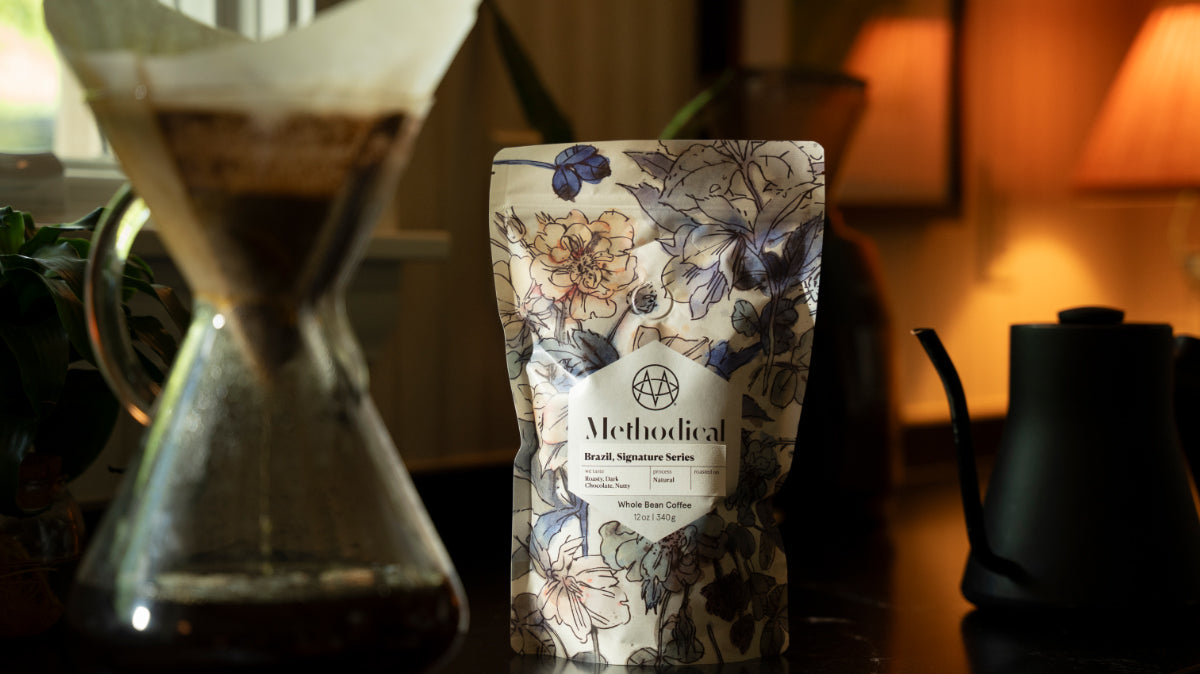
Region: Origin gives you useful hints about flavor character. For example, coffees from Kenya or Ethiopia often showcase lively citrus, berry, or floral acidity, whereas coffees from Brazil tend to present lower perceived acidity with more prominent chocolate and nutty notes.
-
Processing: How the coffee cherry is processed changes how acidity shows up in your cup. Washed coffees tend to highlight crisp clarity and articulated brightness, while natural coffees lean into fruit-forward sweetness and a rounder body. Processing changes how you experience acidity rather than simply increasing or decreasing it.
Rather than acting in isolation, these factors tend to work together as terroir—how a coffee’s growing conditions influence its taste. For example, many Brazilian coffees are grown at lower altitudes and processed naturally, leading to lower acidity and deep chocolatey and nutty profiles.
How It’s Roasted
The goal of roasting is to delicately balance the coffee’s natural acids. As coffee roasts darker, organic acids break down while roast-driven flavors and body become more prominent. Lighter roasts tend to preserve the bean's origin character and perceived brightness, while darker roasts mute sharp acidity in favor of deep, caramelized sweetness.
That does not make one roast style better than another. A well-developed roast should create balance within its intended profile, whether that means rich and roasty or light and lively.
How You Brew It
Brewing allows you to highlight or soften a coffee’s natural acidity through extraction. If a cup tastes sharply sour or hollow, you can bring out more sweetness by grinding slightly finer or extending your brew time. If a cup tastes overly bitter or dry, you’ll want to coarsen your grind or shorten your brew time to pull back extraction.
Cold brew offers a great example of how brewing method alters perception. While hot and cold brews often sit at similar pH levels, cold brew extracts lower overall titratable acidity, which is why it tastes notably softer, smoother, and less sharp on your palate.
Is Acidic Coffee Bad for You?
Not in a general health sense: coffee acidity is not inherently harmful to your body. However, if you have a sensitive stomach or experience acid reflux, sensory acidity can play a role in how your digestive system reacts.
The same natural compounds that create bright, fruity flavor notes—primarily chlorogenic acids—also stimulate gastric acid production in your stomach. Because chlorogenic acids break down the longer coffee roasts, lighter, fruitier roasts contain higher levels of these compounds than darker, roastier coffees.
Just because coffee causes you digestive discomfort doesn’t mean you need to quit drinking it altogether. Try choosing a darker roast, opting for a lower-volume drink like espresso, or cutting the coffee’s acidity with milk or an alternative milk.
Learn More: Is Espresso Easier on Your Stomach Than Regular Coffee?
What About "Low-Acid" Coffee?
You don’t need to buy special “low-acid” branded coffees to find a cup that agrees with your stomach. Usually, these are simply marketing terms for beans that have been slow-roasted over a longer period.
Instead, look for coffees that are naturally lower in perceived acidity. Darker roasts, natural-process coffees, and origins like Brazil tend to contain lower levels of chlorogenic acid. Decaf coffee is another great option: since caffeine itself triggers stomach acid production, switching to decaf can significantly reduce acid reflux.
Our Classic coffees offer a rich, full-bodied cup with a smooth, low-acid profile that is naturally gentle on digestion.

Finding the Acidity Profile You Enjoy
Instead of overthinking how acidity should show up in your cup, let your personal preference guide which coffees you choose. To help you find your ideal profile, we categorize our coffees based on how they express brightness, body, and sweetness:
|
Category |
Perceived Acidity |
Profile |
Example Coffees |
|
High |
Light, tea-like, and expressive with fruity, citrus, and floral notes |
||
|
Balanced |
Medium-bodied with notes of dark or dried fruit and balanced sweetness |
||
|
Lower |
Rich, dark, and full-bodied with notes of chocolate, baking spices, and nuts |
How to Adjust Acidity in Your Cup
To change how acidity shows up in your coffee, use subtle adjustments in your brewing technique or choose beans with a more vibrant profile.
If you want to bring out brighter, more expressive qualities:
-
Lower your water temperature slightly: Bright organic acids extract early and easily during brewing. Using slightly cooler water (around 195°F–200°F) allows you to highlight those lively, volatile acids while preventing heavier, bitter compounds from dominating the cup.
-
Brew with a pour-over method: Filtration methods like the Hario V60 or Chemex use paper filters to trap heavy coffee oils, resulting in a clean, articulated cup where bright acidity and subtle flavor notes can shine.
-
Choose washed-process coffees: Washed coffees naturally showcase nuanced flavor profiles, clean structure, and pronounced, crisp acidity.
If you want a rounder, smoother cup:
-
Increase your water temperature slightly: Using hotter water (around 200°F–205°F) increases extraction efficiency. This pulls out richer caramelized notes that round out initial sharpness, creating a smoother, more balanced finish.
-
Try immersion brewing or cold brew: Full-immersion methods like the French press allow natural oils to remain in the cup for a velvety mouthfeel. Cold brewing uses cold water and extended time to produce a naturally smooth, low-acid extraction.
-
Opt for natural or honey-processed beans: During natural and honey processing methods, coffee beans absorb sugars from the fruit pulp while drying, inherently producing fuller-bodied, sweeter cups with softer perceived acidity.
A Full Spectrum of Flavor
Acidity is what gives every coffee its unique structure and character. When you recognize where a roast sits on that spectrum, you can choose a profile you love and brew it to its fullest potential.
Finding your ideal profile means exploring different roasts and noticing what you enjoy most. Whether you gravitate toward a crisp, vibrant pour over or a rich, comforting pot of drip, our coffee lineup offers a full range of brightness, body, and sweetness to suit your palate.
Explore Methodical whole bean coffee →
You might also like: