
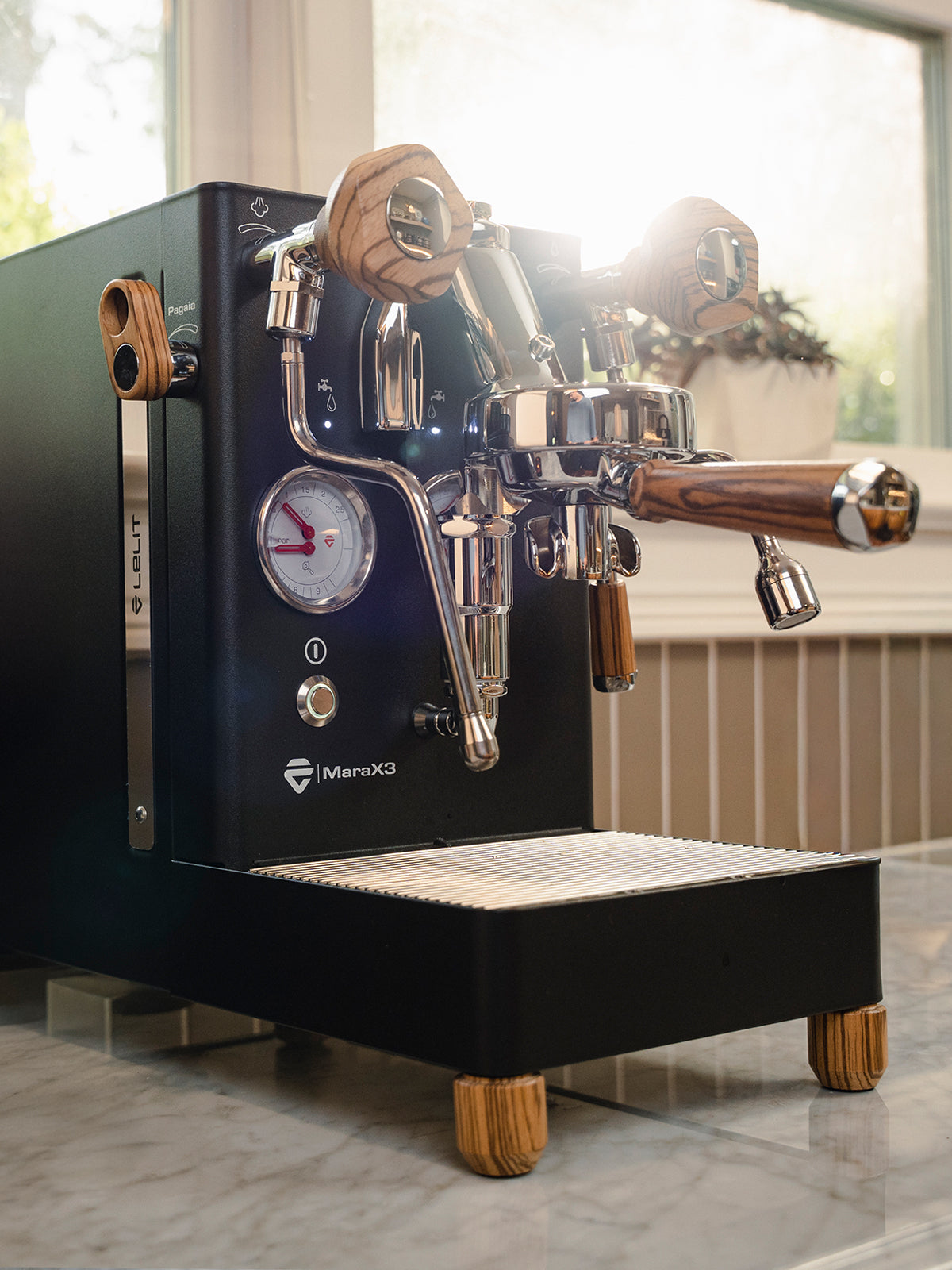


If you’re making espresso at home, it’s easy to wonder whether a more expensive machine would noticeably improve what ends up in your cup. Maybe you’re working with an entry-level setup and starting to bump into its limitations. Or maybe you’re eyeing a $2,000-plus machine and trying to figure out whether the upgrade is actually worth it.
The answer is a little more complicated than “more expensive means better espresso.” Higher-end equipment can give you better temperature stability, pressure control, consistency, and workflow, but the machine is only one part of the equation. Coffee quality, grind, water, and technique all have just as much influence on the final shot.
So, before you start shopping, it helps to understand exactly what you’re paying for and which upgrades are most likely to make a difference in your espresso.
Does expensive espresso equipment improve taste?
An expensive espresso machine is worth it if you treat espresso as a hands-on craft and want features like steady temperatures and fast milk steaming. A cheaper machine works fine if you want quick, simple coffee and pair it with fresh beans and a capable grinder. Price alone doesn't determine what ends up in your cup.
More expensive equipment buys you greater control over brewing variables and more consistency from shot to shot. But those advantages only matter once you've already dialed in the fundamentals. Good coffee, proper grind, clean water, and the right ratio all affect flavor more than the machine.
Think of equipment as setting a ceiling for what's possible. A capable setup used well can outperform a much more expensive setup used carelessly. You might be surprised how far modest gear can take you when everything else is in place.
What actually changes the taste of espresso?
Espresso flavor comes from a combination of variables working together, not just the machine on your counter. Coffee quality, grind, water, recipe, temperature, and technique all play a role in what ultimately ends up in the cup.
Coffee quality and freshness
The coffee itself sets the foundation for every shot you pull. Roast profile, freshness, origin, processing, and flavor characteristics all influence the quality and final cup profile. Expensive equipment can't create flavors that aren't present in the beans, but you can use it to help you access what's already there.
Coffee freshness peaks within a few weeks of roasting. Pre-ground coffee goes stale faster still, losing the volatile aromatics that give espresso its complexity. Starting with fresh, whole-bean coffee gives you the best chance at a flavorful shot regardless of your machine.
Grind size and consistency
Espresso demands fine adjustments to grind size. Sometimes just a few clicks on your grinder can shift a shot from sour to balanced. More uniform grounds help produce more even extraction, where water pulls flavor from each particle at a similar rate.
Inconsistent grinding introduces randomness. Some particles over-extract while others under-extract, muddying the flavors. This happens regardless of how expensive your espresso machine is.
Learn how to grind coffee correctly at home →
Dose and brew ratio
The amount of coffee you use and the amount of espresso you yield influence strength and extraction. A common starting point is around 1:2—for example, 18 grams of coffee in, 36 grams of espresso out. A small scale makes it easier to repeat a successful recipe and diagnose what went wrong when a shot tastes off.
Learn more about ideal coffee-to-water brew ratios →
Water quality
Water makes up more than 90% of your espresso. Its mineral content affects both extraction efficiency and flavor. Hard water can leave scale buildup in your machine and dull the coffee's brightness. Overly soft water can make extraction sluggish and flat.
Filtered or bottled water with moderate mineral content often works well. Addressing water quality before blaming the machine is a good habit.
Learn more about the best water for coffee →
Temperature and pressure
Espresso machines deliver water under pressure at a specific temperature. Small fluctuations in either can shift the balance of your shot. Too hot, and you risk bitterness. Too cool, and the shot may taste sour or underdeveloped.
This is one area where higher-quality machines offer a meaningful advantage. Stable temperature and predictable pressure make it easier to reproduce a recipe you like.
Puck preparation and technique
How you distribute and tamp the coffee in the portafilter affects how water flows through the bed. Uneven distribution creates channels where water rushes through, under-extracting some areas and over-extracting others.
Good equipment makes consistency easier, but unless you’re using a super-automatic machine, it doesn't eliminate the need for attention to technique.
Espresso grinder vs. machine: which matters more?
This is one of the most common questions for anyone building a home espresso setup. The grinder isn't merely an accessory; it's central to the process.
Espresso requires a fine, consistent grind with precise adjustments. A grinder that can't produce uniform particles or make small enough changes will limit your results no matter what machine you pair it with. A premium espresso machine paired with an unsuitable grinder can still produce disappointing shots.
For someone working with a limited budget, improving the grinder often solves problems that buying a more expensive machine would not.
-
Grind consistency: Burr grinders produce uniform particles; blade grinders create uneven grounds that extract unevenly
-
Freshness: Grinding just before brewing preserves volatile aromatics that fade quickly once coffee is ground
-
Dose accuracy: Espresso benefits from precise gram measurements, which a scale and good grinder enable
Discover the best burr grinders for coffee →
What do you get with a more expensive espresso machine?
"Expensive" typically means $1,000 or more for home machines. Mid-range falls around $500–$1,000, and budget machines sit under $500. Commercial machines used in cafés cost significantly more and are built for different demands.
Better temperature stability
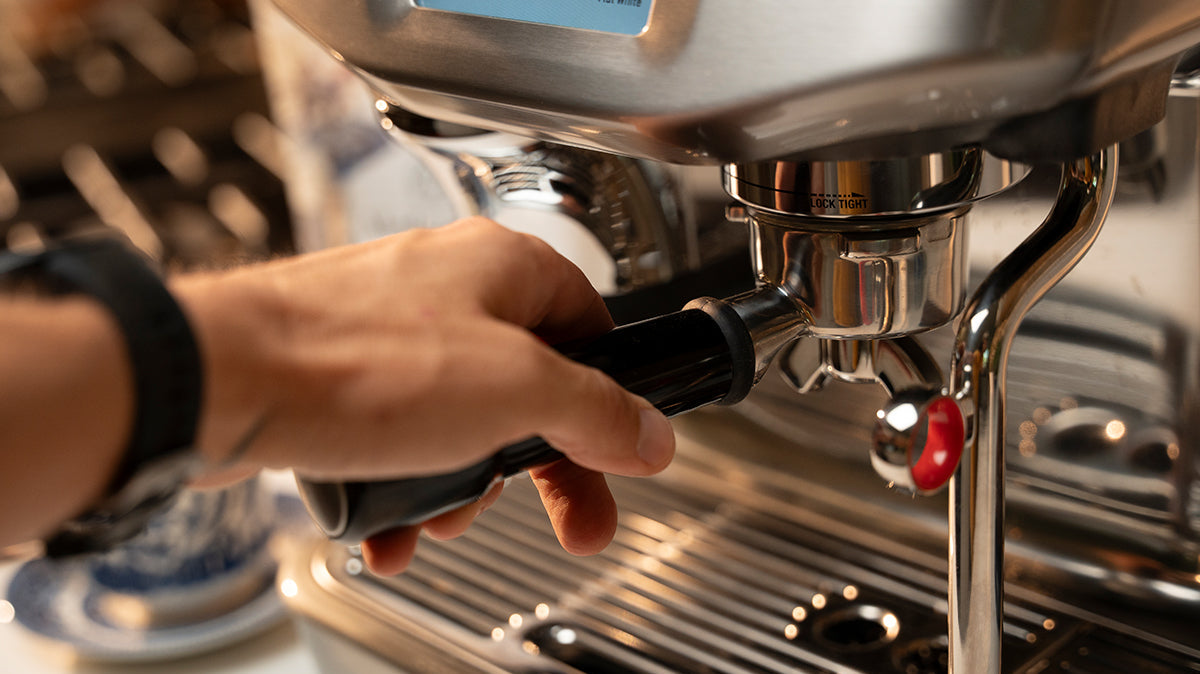
Higher-end machines often maintain brew temperatures more consistently throughout the shot. Many use a PID controller, which is a device that monitors and adjusts heating elements to keep water at a precise temperature.
Temperature fluctuation leads to inconsistent extraction. One shot might taste balanced while the next tastes sour or bitter, even with the same recipe. A PID helps eliminate that guesswork.
More control over brewing variables
Depending on the machine, you may gain access to adjustable brew temperature, pressure profiling, pre-infusion settings, or flow control. Pre-infusion gently saturates the coffee puck before full pressure kicks in, which can improve extraction evenness.
If you're just starting out, all of this can feel overwhelming. The options become more valuable as you develop your palate and want to fine-tune specific aspects of extraction.
Greater consistency
Premium equipment often makes it easier to repeat the same recipe shot after shot. Consistency just means your results are more predictable, which makes dialing in faster.
Better workflow and steaming performance
Faster heat-up times, quicker recovery between shots, and stronger steam pressure all improve the experience of making espresso drinks. Dual-boiler machines let you brew and steam milk simultaneously, which matters if you're making multiple drinks or don't want to wait.
Single-boiler machines require you to wait between brewing and steaming. Thermoblock systems heat water on demand but may lack the steam power of a dedicated boiler.
Build quality and longevity
Some of the premium goes toward materials, repairability, and durability rather than taste. Stainless steel and brass components last longer than plastic. Commercial-grade parts can be serviced and replaced over time.
|
Factor |
Budget machine (under $500) |
High-end machine ($1,000+) |
|
Temperature stability |
Variable, may fluctuate |
Steady with PID control |
|
Brew and steam at once |
Usually no (single boiler) |
Yes (dual boiler) |
|
Build quality |
Plastic components |
Commercial-grade materials |
|
Lifespan |
Several years |
Ten years or more with care |
|
Control over extraction |
Limited adjustments |
Pressure and flow profiling |
The point of diminishing returns
Equipment improvements aren't linear with price. Moving from gear that can't properly control espresso variables to capable equipment can make a noticeable difference in your cup. That jump from a $200 machine to a $600 machine often matters more than the jump from $1,500 to $3,000.
Once the fundamentals are well controlled, additional spending increasingly buys refinement, workflow improvements, customization, and build quality. The flavor gains become subtler.
Rather than asking "how much do I need to spend?" consider asking "what problem am I trying to solve?" If your shots are inconsistent and you've ruled out grind and technique, temperature stability might be the issue. If you're happy with your espresso but frustrated by slow steaming, that's a different upgrade path entirely.
How to upgrade your espresso setup without overspending
You don’t have to replace your espresso machine to make noticeably better coffee at home. Start with the lower-cost changes that improve consistency and control, then upgrade your equipment only when you’ve identified a limitation your current setup can’t overcome.
1. Start with better coffee
Fresh, properly stored specialty coffee is a much cheaper upgrade than replacing equipment. Coffee that was roasted recently and stored away from heat, light, and moisture gives you more to work with in every shot.
If you want to see how much better coffee can improve your current setup, start with an espresso-friendly blend.

2. Use a scale and consistent recipe
A small scale costs far less than any equipment upgrade and immediately improves repeatability. Weighing your dose and yield helps you diagnose what's happening in each shot and repeat the ones you like.
3. Upgrade the grinder
If your current grinder can't make small enough adjustments or produces inconsistent grounds, this is often the highest-impact upgrade. A dedicated espresso grinder with stepless or fine-stepped adjustment gives you the control espresso demands.
4. Improve your water
Before assuming the machine is the problem, check your water. Filtered water or a pitcher with a carbon filter can make a noticeable difference in both flavor and machine longevity.
5. Refine puck preparation
A quality tamper and distribution tool can help with repeatability. Compared to equipment upgrades, they're inexpensive and address a common source of inconsistency.
6. Upgrade the espresso machine when you've identified its limitation
Consider a machine upgrade when you've addressed the other variables and can point to a specific limitation:
-
Temperature swings you can't control
-
Insufficient pressure or flow options
-
Slow workflow that frustrates your routine
-
Weak steaming that can't texture milk properly
-
You've outgrown what the machine can do
So, is expensive espresso gear worth it?
Expensive equipment makes the most sense when you understand what limitation you're paying to remove. If your shots are inconsistent because of temperature swings, a machine with better thermal stability addresses that directly. If you're happy with your espresso but want faster workflow, dual boilers and stronger steam become relevant.
Beginners don't necessarily need premium gear to make excellent coffee. A capable grinder, fresh beans, clean water, and attention to technique can produce satisfying espresso on modest equipment.
Enthusiasts may value the additional precision and repeatability that premium equipment provides. The best setup balances good coffee, an espresso-capable grinder, a capable machine, appropriate water, and solid technique.
Great espresso starts with great coffee. Before replacing your machine, try brewing up something from Methodical’s coffee collection and see how much more you can get from the setup you already have.
And if you are ready to upgrade your equipment, you can also browse Methodical’s brewing gear for tools designed to give you more control and consistency at home.
You might also like: