


Café coffee and home coffee can start with the exact same beans and still taste completely different. Professional equipment and trained baristas do make a difference, but so do a handful of variables that are well within reach at home.
Understanding what cafés control, and applying the same thinking on a smaller scale, is where most of the gap actually lives. Below, we break down what those variables are and how to start addressing them in your own setup.
Why café coffee tastes better than home brewed
Café coffee often tastes better because coffee shops control variables that most home setups don't: freshly roasted beans, consistent grind size, filtered water, stable brewing temperatures, and recipes that get adjusted daily. Each of these factors affects extraction, which is how water pulls flavor from coffee grounds. When extraction is even and complete, coffee tastes balanced and sweet. When extraction is uneven or incomplete, coffee tastes either bitter or sour.
The difference between a great cup and a mediocre one often comes down to details that are easy to overlook. A café might be using beans roasted one or two weeks ago, grinding them seconds before brewing, and pulling water through at exactly 201°F. Meanwhile, the bag in your pantry might be three months old, pre-ground, and brewed with tap water that's either too hot or not hot enough.
The good news: once you know what cafés do differently, you can apply the same thinking at home. You won't replicate a $15,000 espresso machine, but you can get surprisingly close to café quality with a few intentional changes.
The main factors that separate café coffee from home coffee
A café has several advantages over a home coffee setup, but once you know what’s happening behind the counter, it’s easier to identify where there may be room for improvement in your own setup.
Freshly roasted specialty beans
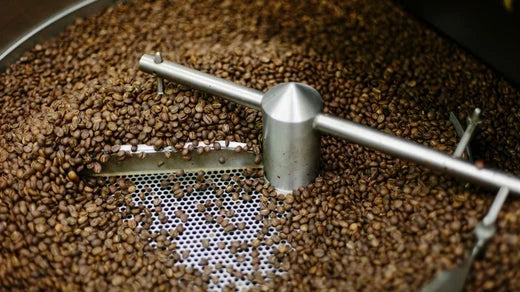
Coffee loses its flavor over time. After roasting, beans begin releasing carbon dioxide and losing aromatic compounds, a process that accelerates once the bag is opened. Most cafés use beans within two to four weeks of their roast date, which is when flavor peaks. They also start with specialty-grade beans in the first place, meaning beans that score 80 or above on a 100-point scale used by trained tasters for clarity, sweetness, and balance.
In grocery stores, coffee bags often display a "best by" date set months into the future, but no roast date. Without knowing when the coffee was actually roasted, you're guessing at freshness. Stale beans taste flat and papery, losing the clarity and sweetness that define specialty coffee in the first place, which means even high-scoring beans lose what made them worth seeking out once they sit too long.
Learn more: How to Choose the Right Coffee Beans Every Time
Filtered water with balanced mineral content
Water makes up about 98% of brewed coffee, so its quality matters more than you might expect. Tap water can swing too far in either direction: some is hard enough to leave mineral buildup and a chalky taste, and some is so soft and chlorinated that it leaves coffee tasting thin or off.
Most cafés have systems that filter water enough to keep the mineral content needed for good extraction, without the inconsistency of straight tap water. Even if you’re using a fridge or pitcher filter for your coffee water, it’s likely not as balanced as a system built specifically for brewing.
Learn more about the best water for coffee →
Commercial burr grinders
Grind consistency is one of the biggest gaps between café coffee and home coffee. Cafés use commercial burr grinders that crush beans between two abrasive surfaces, creating particles that are uniform in size. When all the grounds are the same size, water extracts flavor evenly.
Blade grinders are more common in home kitchens and chop beans with a spinning blade, creating a mix of fine powder and large chunks. The powder over-extracts quickly and turns bitter. The chunks under-extract and taste sour. Together, they produce a muddy cup that lacks clarity.
Even an entry-level burr grinder can significantly upgrade your home setup. You’ll likely notice an immediate difference in cup quality.
Precision brewing equipment
Commercial espresso machines maintain stable temperature and pressure throughout the entire shot. Without temperature stability, extraction rate can change, leading to inconsistent flavors.
Batch brewers in cafés heat water to the optimal range (195–205°F) and distribute it evenly across the coffee bed. Many home drip machines don't reach or hold these temperatures consistently, leaving you with under-extracted coffee.
Learn more: Espresso Machine vs. Coffee Maker: Which is Best for Home Use?
Consistently dialed-in recipes
Beans change as they age: they release gas, lose moisture, and extract differently over time. Add in humidity, grinder drift, and even the time since the last shot, and a coffee's flavor can significantly change over the course of a single day. That's why baristas continuously taste their coffee, adjusting grind size, dose, or brew time to bring it back to a target flavor.
At home, recreating that level of attention every morning isn't realistic for most people. But the same logic still applies on a smaller scale: noticing when a cup tastes off and making a small adjustment, whether grinding a little finer or using slightly less water, can bring a wandering recipe back into balance.
How to make your home coffee taste more like café coffee
Making great coffee at home starts with understanding what cafés already do well. You won't replicate years of training or professional equipment, but addressing the same core variables gets you meaningfully closer to the cup you're chasing.
The list below is ordered by impact, starting with the changes that tend to make the biggest difference.
1. Start with freshly roasted whole bean coffee
Freshness affects coffee more than almost any other variable, which is why it tops this list. Beans begin losing aromatic compounds the moment they're roasted, and that process only accelerates once a bag is opened. Look for bags with a printed roast date, not just a "best by" date, and plan to use the beans within two to four weeks of roasting for the best flavor.
Ordering from a specialty roaster often gets you fresher coffee than buying off a grocery shelf. Roasters typically ship within days of roasting, while grocery store bags may have been sitting in a warehouse for months.
-
Roast date: Tells you exactly when the coffee was roasted
-
Best by date: Often set 6–12 months out, with no indication of actual freshness
2. Upgrade to a burr grinder
Grind consistency might be the single most overlooked variable in home brewing. Irregularly sized particles extract unevenly, leaving you with a cup that's simultaneously over- and under-extracted. A burr grinder solves this by producing consistent particle sizes, which lets water pull flavor evenly from every ground. For many home brewers, this one upgrade makes the most noticeable difference in cup quality.
Grinding fresh matters too. Pre-ground coffee starts losing aromatic compounds within minutes, while whole beans hold their flavor much longer.
-
Entry-level electric burr grinder: Models in the $50–100 range offer a clear improvement over blade grinders
-
Hand grinder: A quality manual burr grinder can match or exceed cheap electric grinders at a similar price
Learn more: Manual vs. Electric Coffee Grinders: Which One Is Right for You?
3. Use filtered water
A basic pitcher filter or refrigerator filter removes chlorine and improves taste without stripping out all the minerals coffee needs for good extraction. Avoid distilled or reverse-osmosis water unless you're adding minerals back in, since water that’s too soft can leave coffee tasting flat.
For those who want to take it further, mineral packets designed for coffee brewing let you build water with a specific mineral profile. This step is optional, but it can noticeably improve clarity and sweetness, especially in espresso and lighter roasts.
4. Follow a consistent brew ratio
A brew ratio describes the relationship between coffee and water by weight. Starting with a consistent ratio gives you a baseline to adjust from based on taste.
|
Brew Method |
Starting Ratio |
Adjustment |
|
1:16 (1g coffee to 16g water) |
1:15 for stronger, 1:17 for lighter |
|
|
1:15 (1g coffee to 15g water) |
Smaller ratio for a stronger brew |
|
|
1:2 (1g coffee to 2g yield) |
Adjust the dose or yield by a gram or two at a time |
Use a kitchen scale to remove guesswork and make it easy to replicate the ratio you like.
5. Control your brewing temperature
Water temperature affects how quickly flavor compounds extract from the grounds. Too hot and you pull bitter, harsh notes; too cool and the coffee comes out sour and underdeveloped.
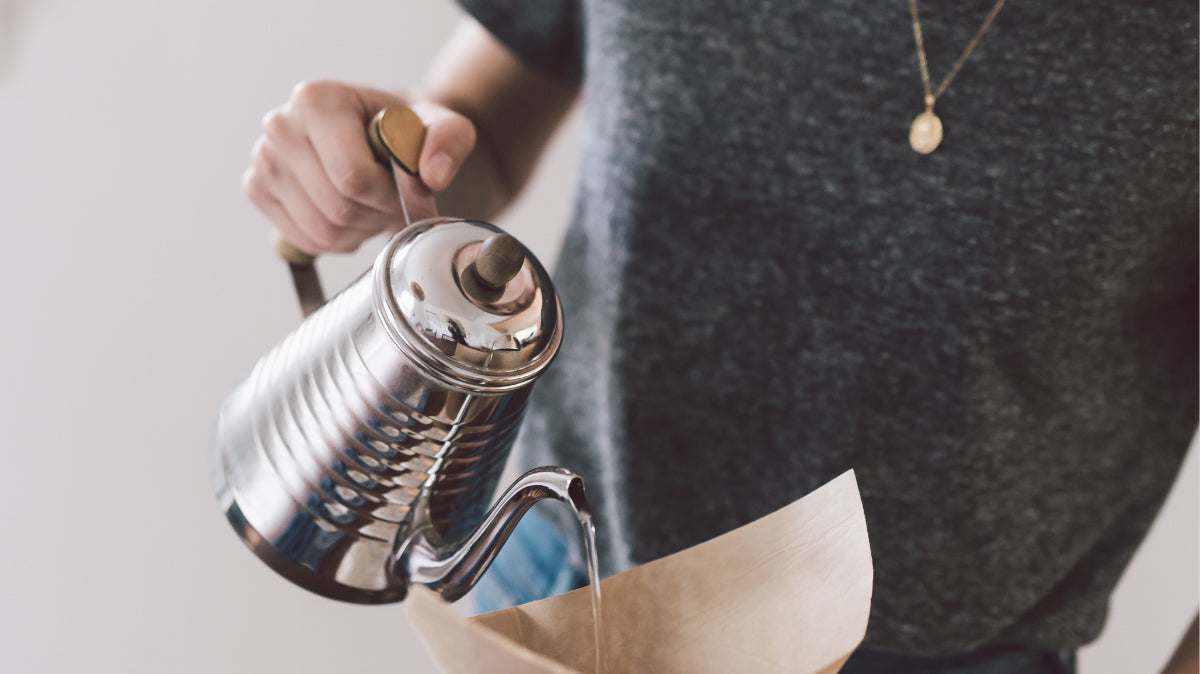
For most brewing methods, water just off the boil (around 200°F) works well. If you don't have a temperature-controlled kettle, letting boiling water rest for 30 to 45 seconds before pouring gets you close enough. It’s a small adjustment that makes a more noticeable difference than most people expect.
6. Clean and maintain your equipment
It's easy to overlook, but a dirty setup can undo everything else on this list. Coffee oils go rancid over time and leave residue on grinders, brewers, and carafes, and that buildup creates stale, off-flavors that mask the coffee's true character no matter how good your beans or technique are.
Rinse your brewer after each use and deep clean weekly. For grinders, brush out retained grounds regularly and run cleaning tablets through periodically. A clean setup lets the coffee speak for itself.
How to choose beans that match café quality
Technique matters, but so does what you're brewing. Cafés source specialty-grade beans roasted with precision. If you want café-quality coffee at home, you have to start with the same baseline: exceptional, intentionally sourced coffee.
Look for a roast date on the bag
A roast date tells you exactly how fresh the coffee is. Beans typically taste best between 7 and 21 days after roasting—long enough to degas but before they go stale.
"Best by" dates don't provide the same information. If you can't find a roast date on the bag, the beans are likely past their peak.
Choose beans by flavor profile instead of roast level
"Light," "medium," and "dark" describe how long beans were roasted, but they don't tell you much about how the coffee will actually taste. Two medium roasts from different origins can taste completely different from each other.
Choosing by flavor descriptors rather than roast level helps you find coffees that match your preferences.
Classic
Familiar, comforting, full-bodied coffees with rich, chocolatey notes.

Contemporary
Approachable yet nuanced coffees that taste balanced with fruity complexity.

Browse all Contemporary coffees →
Avant-Garde
Expressive and vibrant coffees with bright, tea-like, and floral profiles.

Browse all Avant-Garde coffees →
Consider a specialty coffee subscription
A subscription delivers freshly roasted beans on a regular schedule, so you're never brewing with stale coffee. Many roasters rotate their offerings, which lets you explore different origins and processing methods without extra effort.
Subscriptions also remove the timing guesswork—fresh beans arrive before your current bag runs out.
Explore Coffee Subscriptions →
Bringing café quality into your daily ritual
Cafés have a few advantages that aren't practical to replicate at home: commercial equipment, trained baristas, and the time to dial in every single batch throughout the day. But the variables that matter most are well within reach: fresh beans, a decent grinder, filtered water, and attention to ratio and temperature.
Small upgrades compound over time. You don't have to change everything at once. Start with fresher beans and a burr grinder, then refine from there as you notice what makes a difference in your cup.
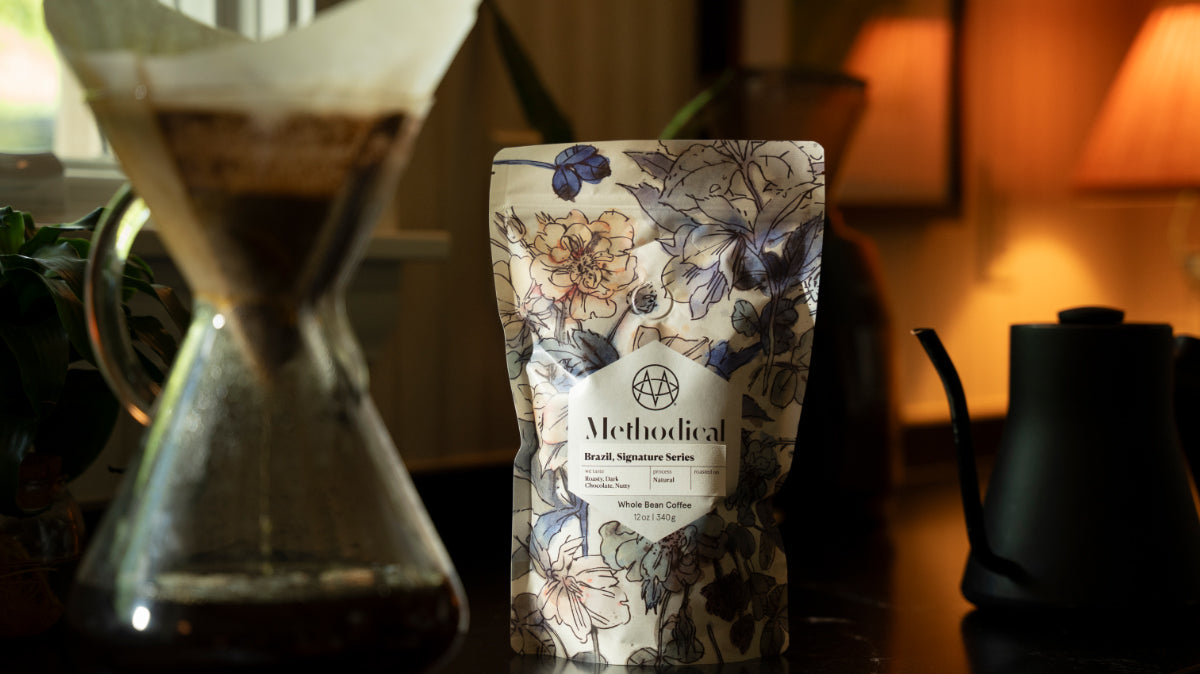
If you're looking for a place to begin, our whole bean coffee blends are a natural starting point: approachable flavors that hold up well across any brew method, even as you're still dialing things in.
You might also like: